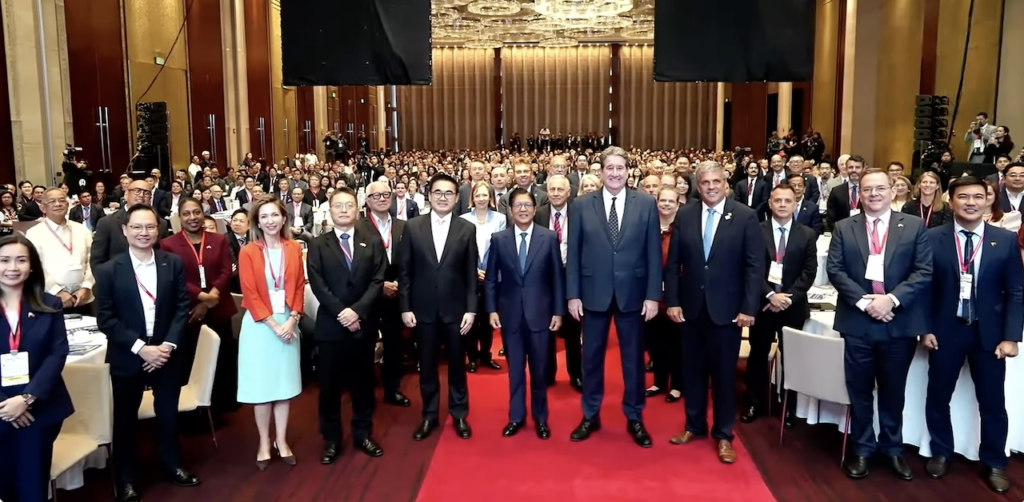
“Americans care about the Luzon Economic Corridor. We believe in the Philippines. We believe in this partnership. And we want the US-Philippine relationship to become so big, so strong, so valuable, that nothing could pull us apart. Nothing,” thus declared United States Ambassador to the Philippines Lee Lipton.
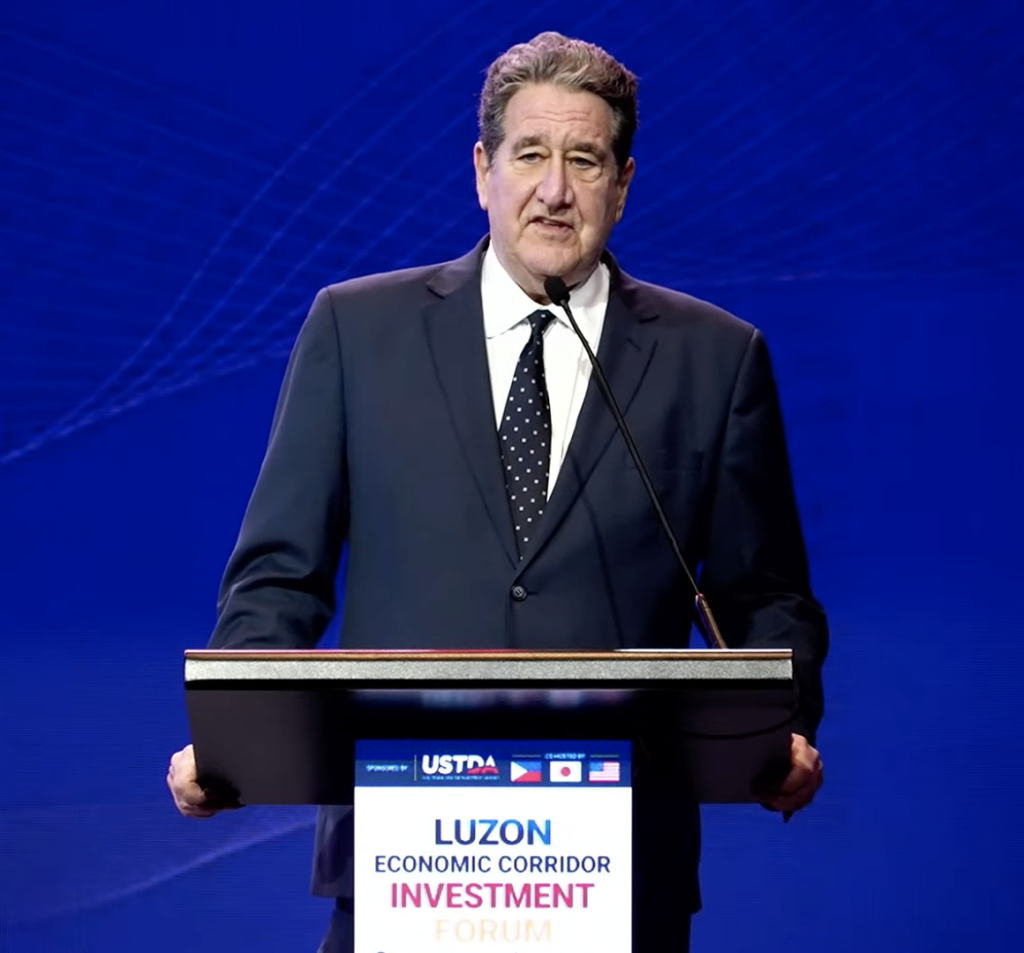
He made this bold statement in front of more than 600 investors and industry leaders at the inauguration of the Luzon Economic Corridor Investment Forum held recently at the Grand Hyatt Manila.
The Corridor initiative is described as a partnership that accelerates coordinated investment to create jobs and advance a more connected, competitive and an envisioned prosperous Philippines.
The US Embassy further defines the investment initiative as one being led by the Philippines, the United States and Japan, with a growing group of partner nations. It focuses investment in transportation and logistics, energy, digital infrastructure, and advanced manufacturing, along the economic corridor stretching from Subic Bay and Clark, through Manila to Batangas—a region representing 50 percent of the Philippines’ Gross Domestic Product.
“United States is all in, Sir. United States is all in. In Subic, we’re contributing to investments in transportation, energy and more. In Batangas, we’re approving port resilience and accelerating private sector growth. In New Clark City, the United States and the Philippines are working together on an ambitious idea to attract investment in the semi-conductor’s AI and trusted technologies,” Ambassador Lipton noted, adding the corridor will provide better job opportunities for Filipinos.
“These are the industries that will shape the future for Filipinos and the free world. The Luzon Economic Corridor is an ultimate lead about infrastructure. It’s about people. It’s about Filipinos getting better jobs to support their families and their communities. It’s about Filipino engineers building world-class careers, right here at home, using their talents to help build this country. It’s about more Filipino and American companies doing more business together and creating great jobs in and for both our countries.
“It’s about giving more Filipinos a choice. A choice to pursue a career. A great career, without leaving home to find it. To build a life in the people they love and to spend the holidays together and be here rather than go somewhere else to go find that job. That’s what we’re believing. And look around this room. We have investors here from the United States, Japan, Korea, Taiwan, Australia, Europe and around the world.
“We have companies already investing, hiring and building. We have government leaders ready to listen and ready to act. This is really an extraordinary group of people. So before we go any further, come on, let’s put our hands together, everybody in the room, who is betting on the Philippines and helping us build a better future,” the ambassador stressed, as he rallied the audience to applaud for the initiative.
Ambassador Lipton also underscored ideas are not enough to realize the Philippines’ quest for a speedy and more notable progress.
“Ideas are easy, closing deals is hard. Getting projects to the finish line is even harder. You need capital. You need power. You need ports, you need roads. You need suppliers.You need smart people.
“While governments play an important regulatory role, government also needs to make it possible to get things done. That’s why I’m so excited about the Luzon Economic Corridor. It is a partnership that brings investments together to create jobs, build a more connected, competitive and prosperous Luzon.
“That’s a big idea. But I wanna make it very simple today. Simple as it can be. We’re here to build. We’re building better connections between Subic, Clark, Manila and Batangas. We’re building stronger port, transportation and energy systems. We’re building conditions for Philippine, American, Japanese, and other companies to make big investments here,“ the ambassador stressed.
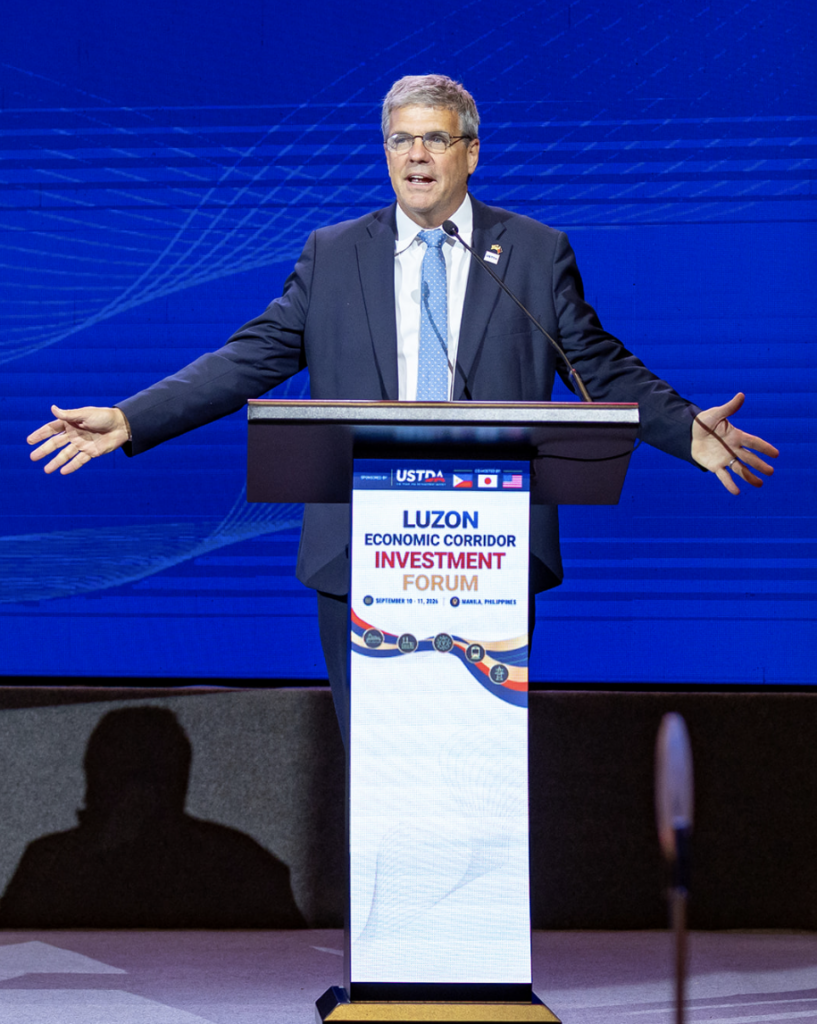
US Trade and Development Agency Deputy Director Thomas Hardy echoed Mr. Lipton’s energy.
“The Corridor’s greatest potential lies ahead. As the quarter grows for a hub for regional and global supply chains, the benefits will extend far beyond the Philippines, helping to advance our shared economic security and strengthen our foundation of a free and open Indo-Pacific.
“The bottom line is this: what’s good for the Philippines is good for all of us,” referring to the forum participants, who he described as people who can help realize the said potential.
Mr. Hardy stressed the role of government and industry leaders to make the vision a reality.
“We have leaders in industry and government who can help move critical infrastructure projects forward to their implementation.
“That is what the US Trade and Development Agency is all about. For more than three decades, we have partnered with the Philippines to prepare infrastructure projects that connect the Philippines’ government-private sectors’ infrastructure priorities with the expertise, technology and financing that the US is known for,” he stressed.
Mr. Hardy rallied the forum attendees to take advantage of the opportunities laid out, to invest in and join other countries and companies to help build a more economically progressive Luzon.
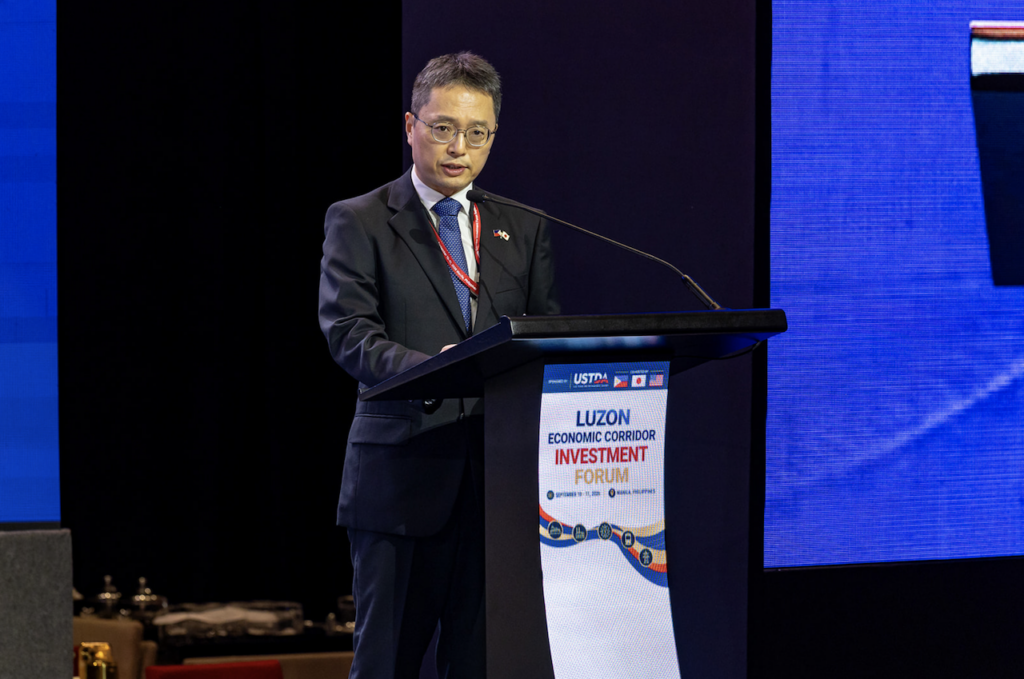
For his part, Japan Charge’ d’Affaires to the Philippines Ono Sho noted the participation of Japanese government and private sector companies in the forum is a model initiative to accelerate the Philippines’ economic growth and connectivity.
“It is an undertaking endorsed at the leaders’ level by Japan, the United States and the Philippines—a clear signal of our shared commitment to turn vision into action.
“New investment does not come only from new entrants. There are many companies which are already doing business here in the Philippines. I would also like to emphasize that ensuring the smooth operation and expansion of these existing businesses can pave the way for further investment.
“Japan is proud to be the Philippines’ largest development partner and one of its closest economic partners. Over many decades, we have supported the country’s infrastructure and development growth. With the consistent focus on quality, resilience and sustainability, the further development of the Philippines and the broader region with greater self-reliance and resilience, it’s essential to all partners committed to a free and open Indo-Pacific.
“In this spirit, the LEC aligns closely with Japan’s free vision and with our shared commitment to quality infrastructure that upholds transparency, sustainability and the rule of law,” Mr. Sho stressed, noting that Japan fully supports President Ferdinand Marcos Jr.’s ‘Build Better More’ agenda.
“Together with the co-hosts, we will work closely with partner countries, international institutions and the private sector to maximize the corridor’s potential, mobilizing finance, technology and know-how. And ensuring that projects are bankable, implementable and impactful,” the Japan Charge’ d’Affaires noted.

Pleased with such a strong commitment from these leaders, President Ferdinand Marcos Jr. assured them and the forum participants the Philippines is moving from identifying possibilities to preparing projects; from expression of interest to commercial partnerships; from shared vision onto investments that can be implemented and objectively measured.
“This comes at an important time. Global supply chains are being redesigned, technology is transforming how goods are produced and services are delivered. Businesses are seeking reliable locations where they can invest for the long term, where they can reach growing markets and draw from a capable workforce. The Philippines intends to be one of those locations.
“We offer a growing domestic market, accessed through major trade routes. A young and talented population and strong economic relationships across the world. We are reinforcing these advantages to better connectivity, reliable energy, modern digital infrastructure and stronger domestic industries.
“We are improving a movement of people and goods across the Corridor. This will reduce costs, support manufacturing and trade and help Filipino enterprises reach larger markets.
“We are expanding our energy capacity to meet the needs of industry and our communities. We are developing renewable resources strengthening the grid and pursuing reliable technology that support economic growth and environmental responsibility.
“We’re also building the digital foundations of a modern economy. We are expanding secure connectivity and advance computing infrastructure. We are strengthening cybersecurity and establishing safeguards for the responsible use of AI (artificial intelligence). The Philippines already has a strong base of digitally-capable workers. We are enabling them to move into the higher-value work and helping Filipino enterprises become creators, not merely users of the new technologies.
“We want our country to help design and build solutions that will help shape our future. The Philippines has long been a trusted participant in global semi-conductor and electronics production. We are now moving further into design, research, engineer and other high-value activities.
“Our location and skilled workforce likewise provide a strong foundation for shipbuilding, ship repair, marine engineering and other maritime industries. We are developing the capabilities needed to establish the Philippines as a more competitive maritime hub.
“We are also developing our critical minerals sector responsibly and strategically. Our ambition goes beyond extracting and exporting raw resources. We want more value to be created here through domestic processing, manufacturing, research, innovations, with strong environmental safeguards and clear benefits for our affected communities.
“Across all these sectors, our goal is not simply to attract investment. We want investments that strengthen our economy and expands Filipino capability. We want companies to establish long-term operations, transfer knowledge and technology, develop Filipino talent and work with local suppliers.
“We want Filipino enterprises to become producers, innovators, exporters and investors in their own right. We want Filipinos to capture a greater share of the value created in our country. This is why we are investing in our greatest asset, our people,” the Chief Executive stressed.
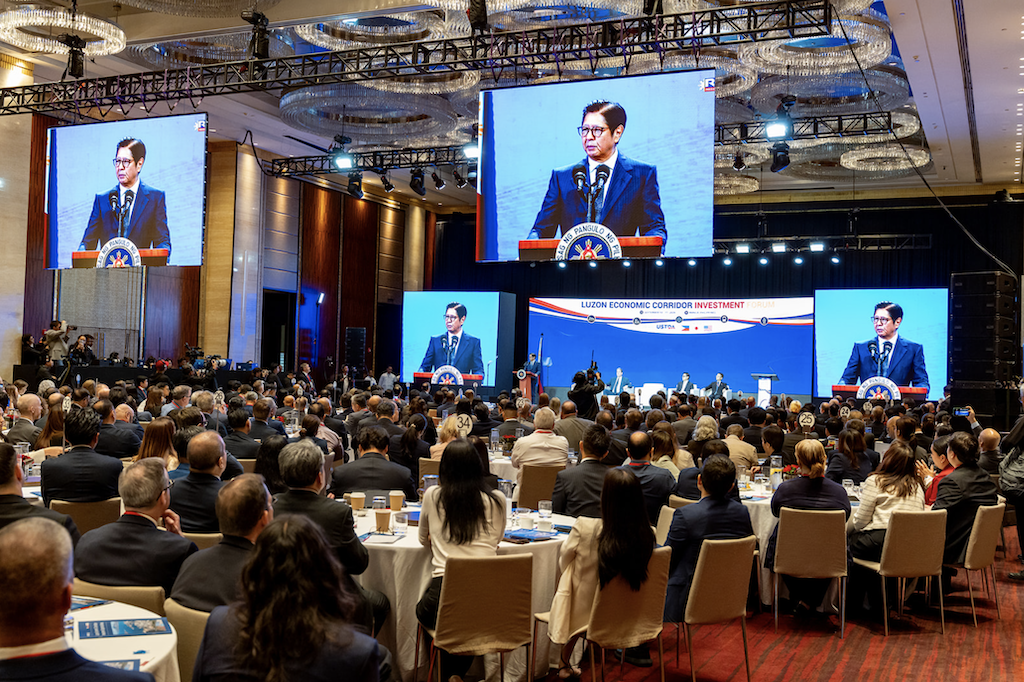
The President also noted his government is already making reforms to respond to what long-term investors want to see and experience.
“We understand what long-term investors require: consistent rules, credible institutions, timely decisions and commitments that are honored.”
President Marcos then urged the investors to come in and work with the Philippine government.
“I invite you to build with us. Build your next enterprise here in the Philippines. Bring your capital, technology, your expertise. Develop Filipino talent and local suppliers. Form lasting partnerships with our businesses and our communities. You can place your trust in the Philippines. We know that trust is earned through consistent action. So we will continue providing that stability, the infrastructure, the talent and the responsive government that long-term investment requires,” he stressed.
And it was quite evident the United States was the first to give its trust, by signing a grant agreement with the Philippines for USD60 million (approximately PHP3.68 billion) under the Millenium Challenge Corporation threshold program, that aims to lower the cost of electricity in the country—a fund that is expected to study how exorbitant electricity rates, can be brought down.
After all, some business leaders in the forum, who refused to be identified, pointed out that the high electricity cost is among the major concerns of potential investors in the Philippines.
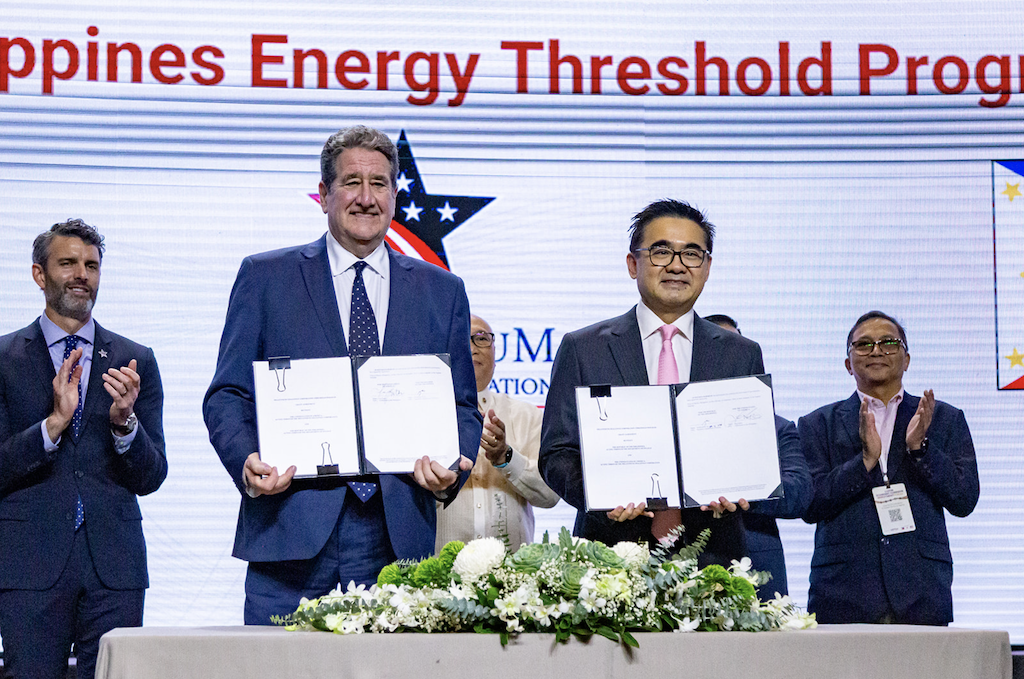
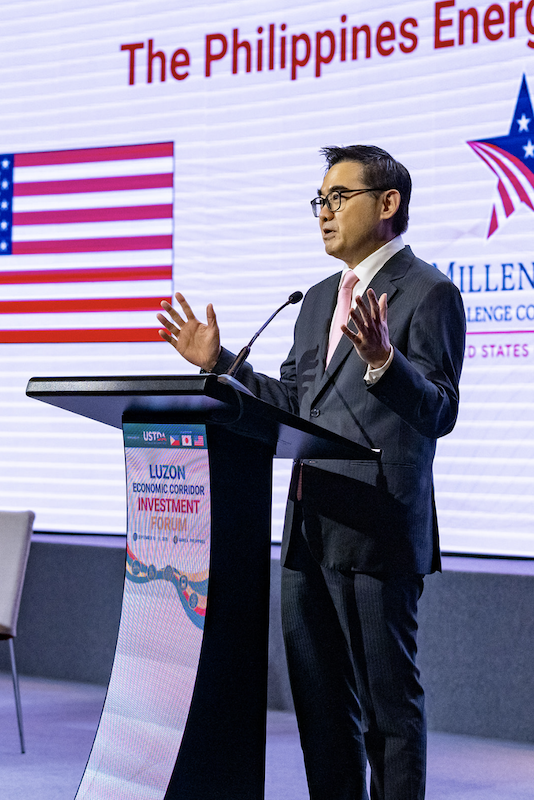
No less than Finance Secretary Frederick Go accepted the grant and assured the fund will be utilized to analyze how to go about pushing electricity costs down.
It remains to be seen whether the Luzon Economic Corridor Investment Forum indeed helped earn the support of various foreign companies and countries into mobilizing investment in Luzon. Until then, the Filipino people will be quietly observing and anticipating a significant improvement in how business is done in the Philippines to benefit them and their quality of life in their native land.
(Photos courtesy of the US Embassy in the Philippines and RTVM)