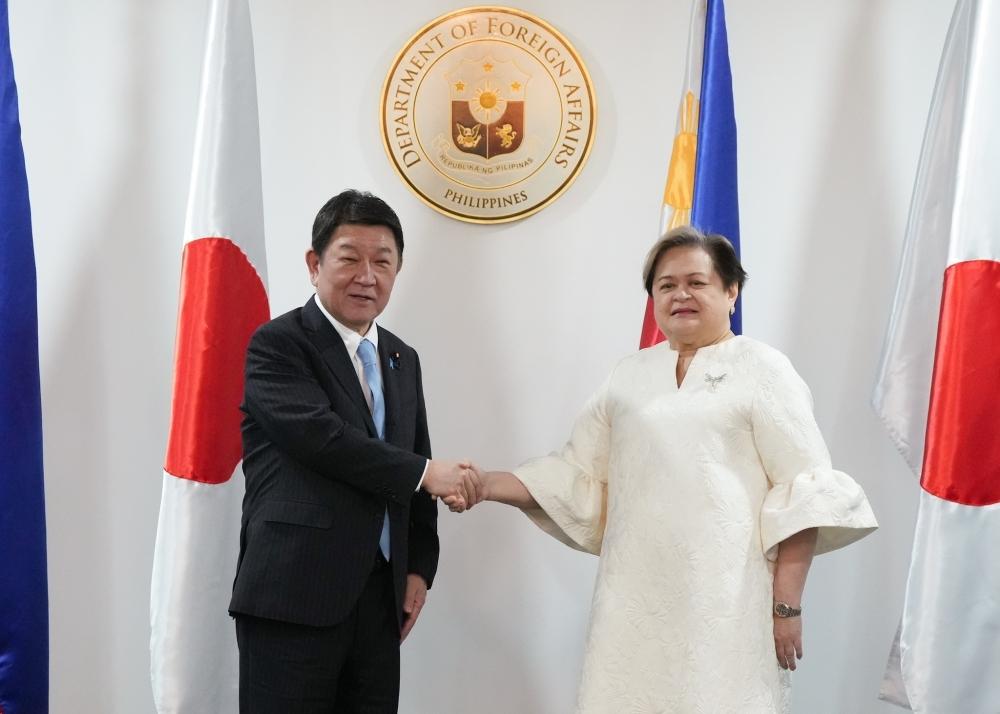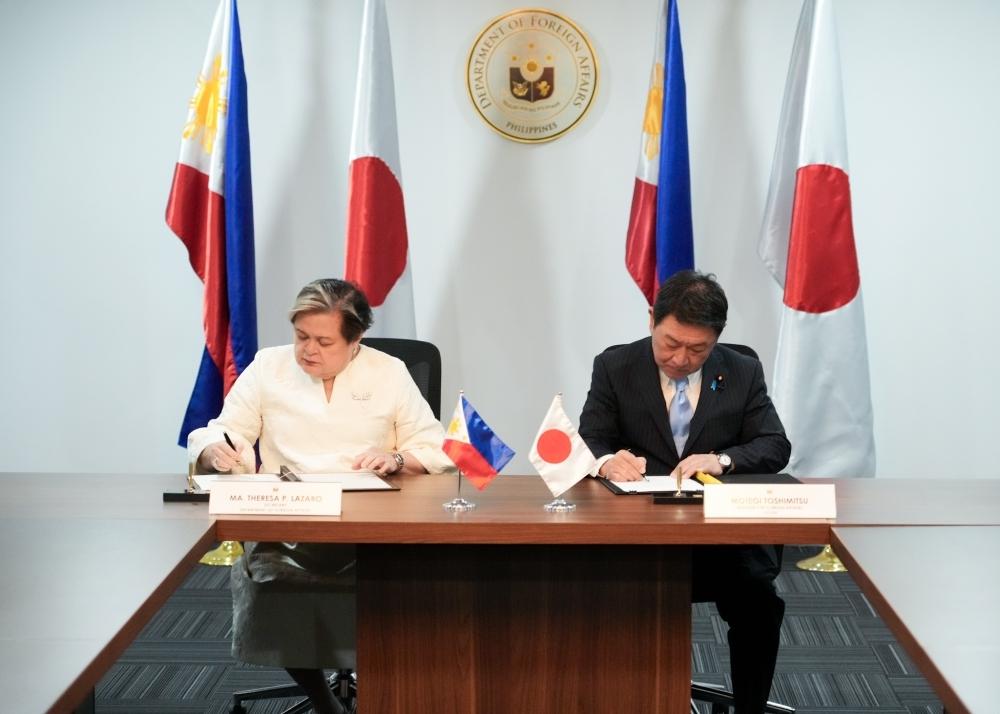
Japan Foreign Affairs Minister Motegi Toshimitsu recently concluded his official visit to the Philippines with a number of cooperation agreements signed by him along with Philippines Foreign Affairs Secretary Maria Theresa Lazaro.
Minister Motegi said he sees his Philippine visit at the beginning of the year to coincide with the 70th anniversary of the normalization of diplomatic relations between the two countries, and with the Philippines bearing the responsibility as the ASEAN Chair this year.
One of the highlights of the visit was the signing of the Acquisition and Cross-Servicing Agreement (ACSA), aimed at the reciprocal provision of supplies and services between the Self-Defense Forces of Japan and the Armed Forces of the Philippines.
The two officials noted the foundation of the bilateral security cooperation has been strengthened following the entry into force of the JP-PH Reciprocal Access Agreement (RAA) last year.
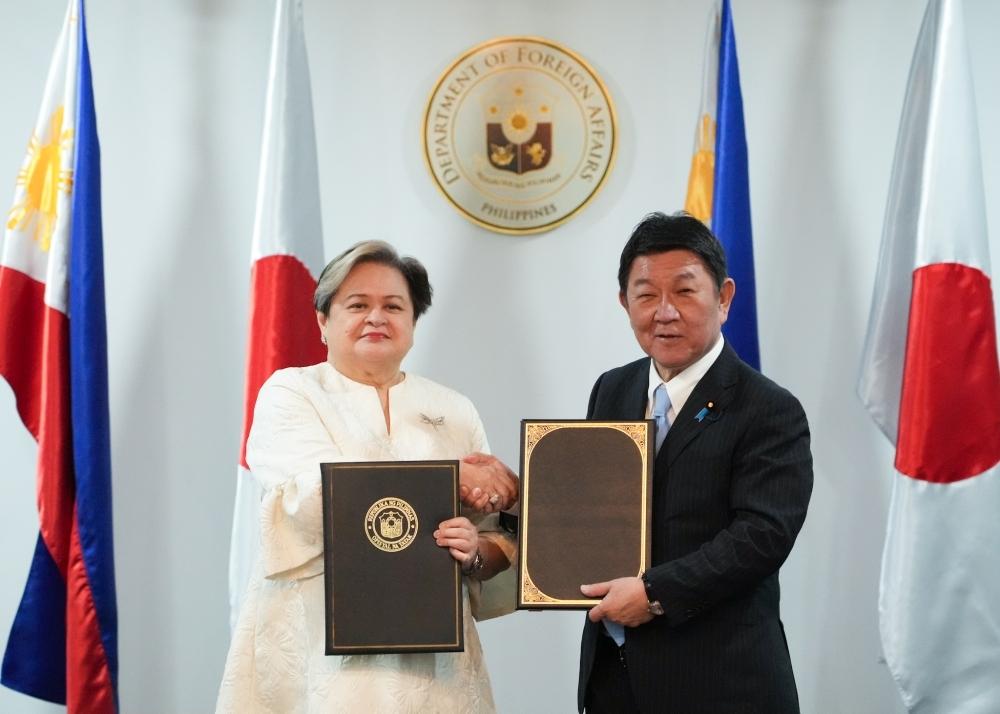
They also signed and exchanged notes for Japan’s Official Security Assistance (OSA) FY2025 project, the first infrastructure project under Japan’s OSA program which includes construction of boathouses and slipways for rigid-hulled inflatable boats (RHIBs) for the Philippine Navy. They mentioned the coastal radar systems under the first OSA project for the Philippines had arrived on January 14.
During their discussion on the provision of multi-role response vessesls (MRRVs) through Official Development Assistance (ODA), Minister Motegi expressed Japan’s intention to continue contributing to the reinforcement of the Philippines’ capabilities in the maritime security area, which is also crucial for the realization of a Free and Open Indo-Pacific (FOIP).
On economy, the two officials confirmed the Philippines and Japan will continue working together to enhance the connectivity in the capital area, including through the Metro Manila Subway Project and the North-South Commuter Railway Project, as well as in flood control and disaster management.
They also confirmed the necessity to deepen cooperation in the field of economic security, as they see the urgency to diversify supply chains amid the heightening concern over export control of critial minerals.
With Japan’s intention to continue supporting the development, stability, and peace process in Mindanao, the two officials signed and exchanged notes concerning the grant assistance of JPY1.63 billion (over PHP600 million) to provide wireless communication equipment to remote islands in the region, such as the provinces of Basilan, Sulu, and Tawi-Tawi.
This project aims to eliminate the digital divide by establishing communication infrastructure (microwave radio transmission devices, IT equipment) for providing network-based public services in government and municipal institutions, schools, hospitals, community centers, and other facilities in the region.
Lastly, the two officials confirmed continued cooperation in the civil nuclear energy field and under the platform of the Asia Zero Emission Community (AZEC).