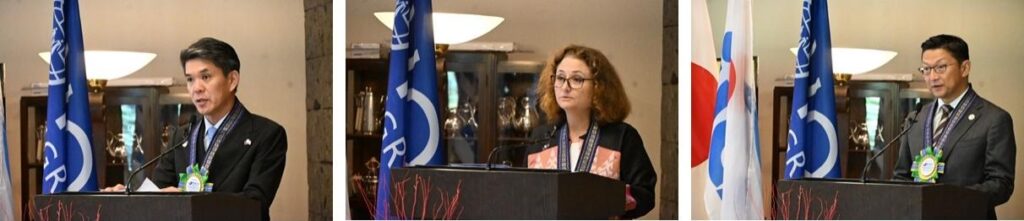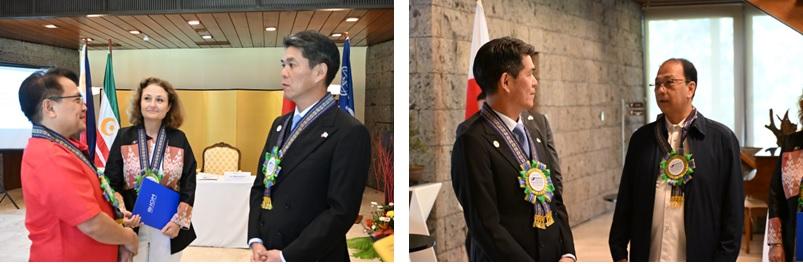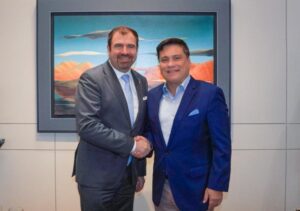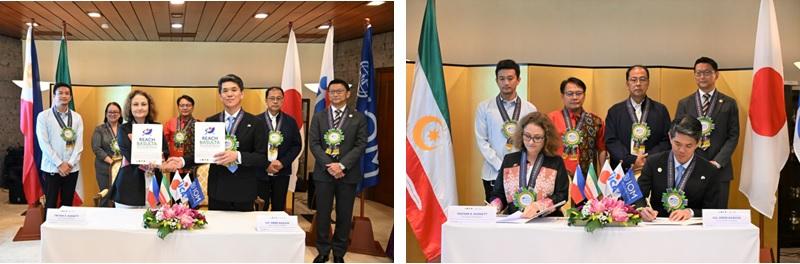
Japanese Ambassador to the Philippines Endo Kazuya signed and exchanged notes yesterday with International Organization for Migration (IOM) Chief of Mission Tristan Burnett for “Strengthening Maternal and Child Health Services for Internally Displaced Persons on the Remote Islands of Conflict-Affected Areas” Project.
Also present during the event were Office of the Presidential Adviser on Peace, Reconciliation, and Unity (OPAPRU) Secretary Carlito Galvez Jr.; Department of Foreign Affairs (DFA) Deputy Assistant Secretary Maria Roseny Fangco; BARMM Health Minister Kadil Sinolinding Jr.; Department of Health (DOH) OIC-Director IV Joel Buenaventura; and Japan International Cooperation Agency (JICA) Philippines Chief Representative Baba Takashi.
Based on the agreement, the Government of Japan will provide a grant assistance of JPY516 million (PHP192 million) to be used for upgrading health facilities and provision of Maternal, Newborn, and Child Health (MNCH) equipment to meet Basic Emergency Obstetric and Newborn Care (BEmONC) and PhilHealth standards. The project also includes implementing targeted technical training of health workers and technical assistance to support health facilities in achieving and sustaining BEmoNC compliance and PhilHealth accreditation.
Dubbed as REACH BASULTA (Resilient and Equitable Access to Care and Health in Basilan, Sulu, and Tawi-Tawi), the project aims to address critical gaps in health facility readiness, workforce capacity, and community awareness, with a focus on internally displaced and mobile populations in BaSulTa.
The project will also promote culturally sensitive, integrated MNCH health promotion campaigns and support government-led PhilHealth registration drives. This two-tiered approach—strengthening both health systems and community engagement—aims to improve MNCH practices and expand access to quality services for women, adolescents, caregivers, and displaced populations.
“The project is a commitment to building a sustainable and resilient health system that prioritizes the well-being of all individuals,” Ambassador Endo said. “By addressing the systemic gaps in health services, we hope to foster an environment where every mother and child has access to the care they need.”