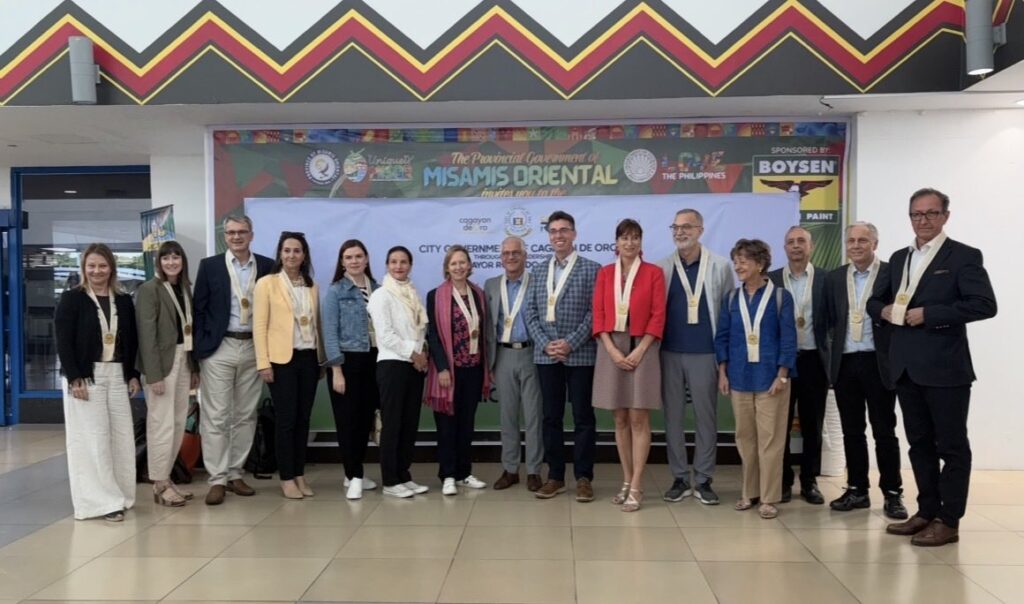
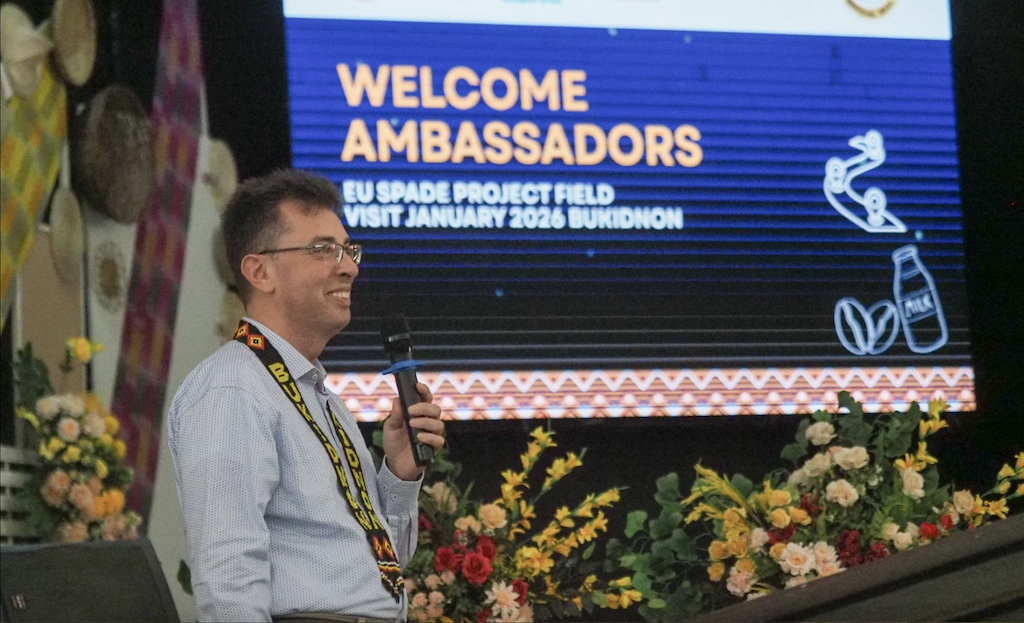
European Union Ambassador to the Philippines Massimo Santoro along with the EU Member States Ambassadors in the Philippines recently paid a three-day official visit to Northern Mindanao jointly for the first time to get acquainted with the region and explore opportunities for further collaboration.
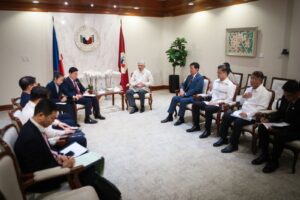
During the visit, the Ambassadors met with Senator Juan Miguel Zubiri, Bukidnon Representatives Jonathan Keith Tello Flores and Jose Manuel Alba, Bukidnon Governor Rogelio Neil Roque, Cagayan de Oro Mayor Rolando Uy, and Impasug-ong Mayor Jetaime Okinlay-Gumban.
Among the EU Member States Ambassadors who visited the region were Titanilla Tóth (Hungary), Raduta Dana Matache (Romania), Marielle Geraedts (Netherlands), Johann Brieger (Austria), Franz-Michael Skjold Mellbin (Denmark), Andreas Pfaffernoschke (Germany), Marie Fontanel (France), Karel Hejč (Czech Republic), Davide Giglio (Italy), Emma Hickey (Ireland), Saija Nurminen (Finland), Anna Ferry (Sweden), Vladislava Iordanova (Belgium); including Anna Krzak-Danel, Chargé d’affaires, a.i (Poland) and Pedro Llinas, Chargé d’affaires, a.i (Spain).
According to Ambassador Santoro, the EU has so far invested more than PHP9.6 billion (EUR140 million) since 2020 in Mindanao, making it as one of the largest grant contributors.
Part of the visit was the EU delegation’s meeting with Bukidnon farmers who demonstrated their climate-smart agricultural practices in line with positioning the province to become the Arabica coffee capital of the Philippines.
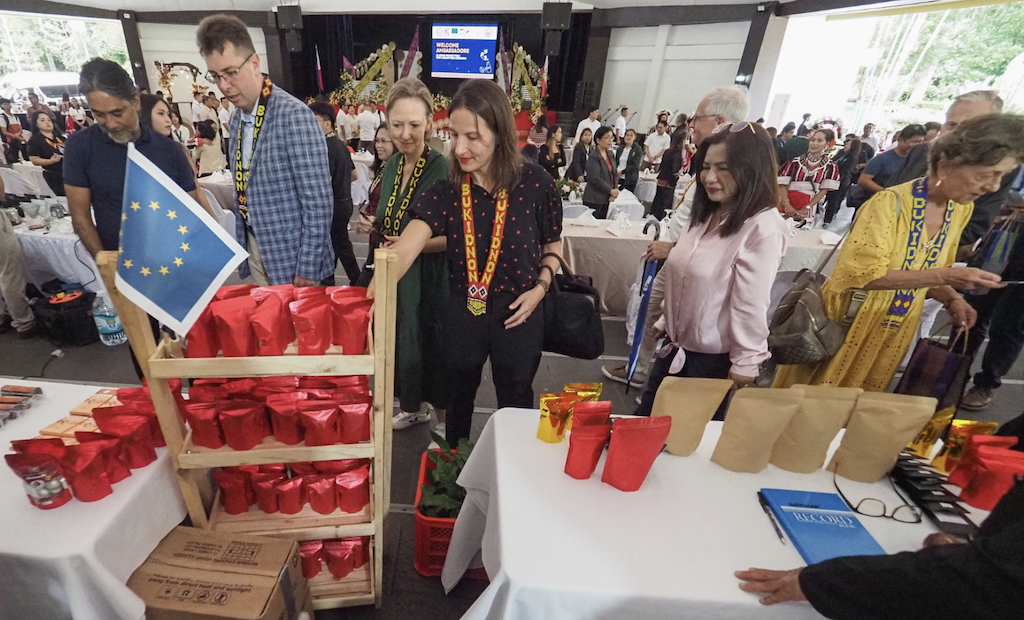
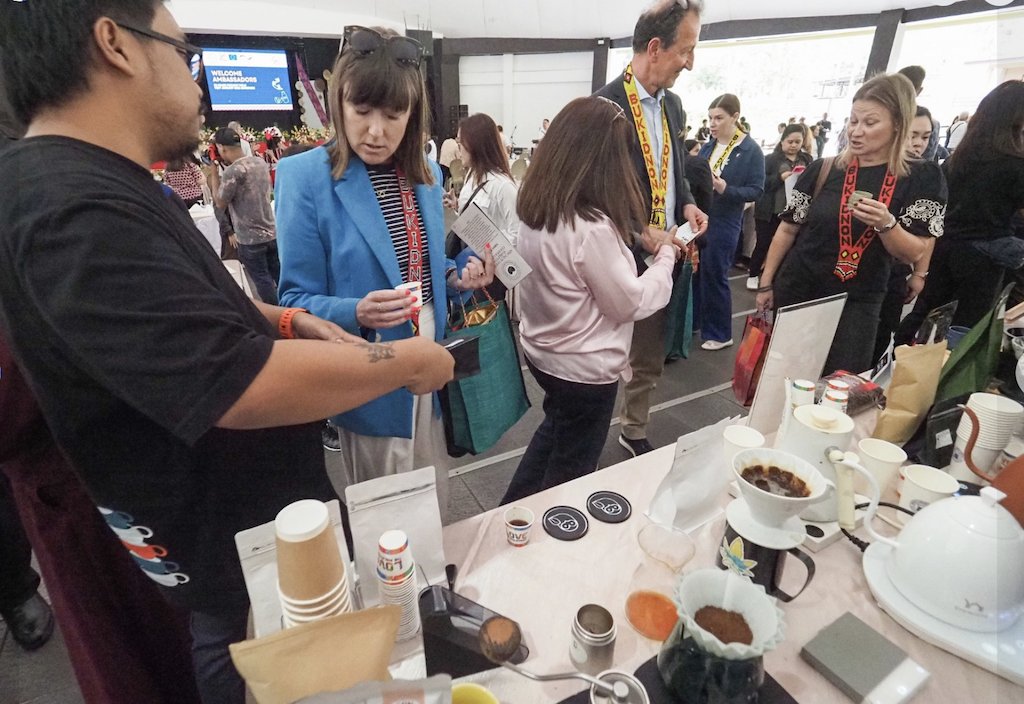
This is part of the SPADE project co-financed by the EU at PHP1.03 billion (EUR15 million) and the German Government at PHP204 million (EUR3 million). The project falls under the European Union Mindanao Peace and Development Program (MinPAD-RISE) supporting the development of conflict-sensitive and climate-smart values chains as well as the promotion of investments in Mindanao.
The EU SPADE supports a cooperative-led approach through the sharing of assets, institutional purchasing, and the adoption of modern technology, to increase the scale and quality of production. As of mid-2025, over 7,000 farming households were assisted by the project with 74% of these farmers adopting climate-smart practices, exceeding project targets.
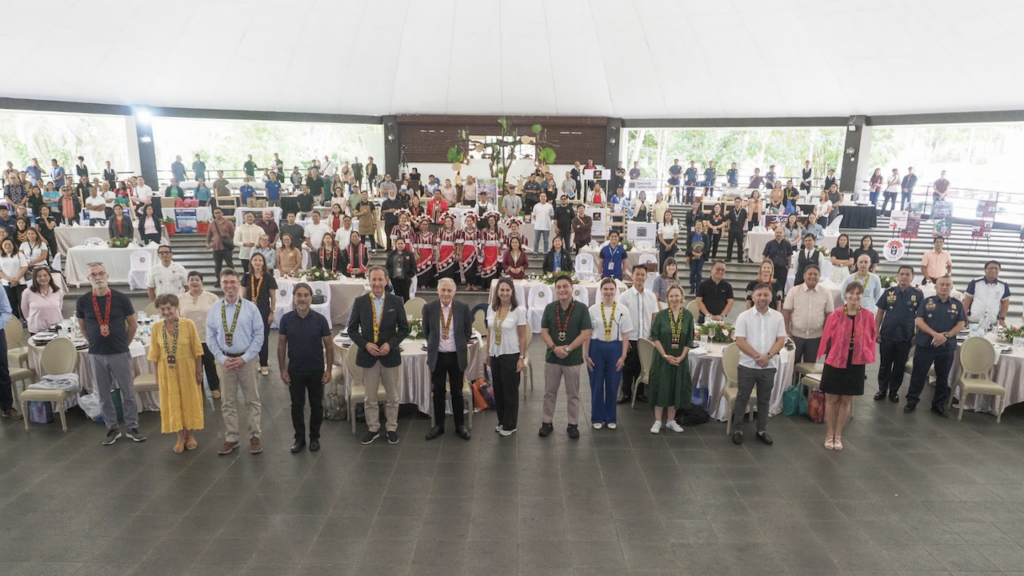
Another project, “Tri-City Justice Zone,” formed by Cagayan de Oro along with Iligan and Ozamiz City to focus on combating Online Sexual Abuse and Exploitation of Children (OSAEC) and Child Sexual Abuse or Exploitation Materials (CSAEM), is supported by the EU-GOJUST program to aid in improving justice coordination for these critical issues.
Launched in September 2024 by the Justice Sector Coordinating Council (JSCC), the Justice Zone in Region X is a collaboration between courts, police, prosecution, civil society organizations, local government units, and other agencies to streamline justice delivery for child exploitation cases. It aims to create efficient, coordinated systems for prevention, prosecution, and support for the victims. The EU is supporting the country’s 16 Justice Zones through the EU GOJUST program.
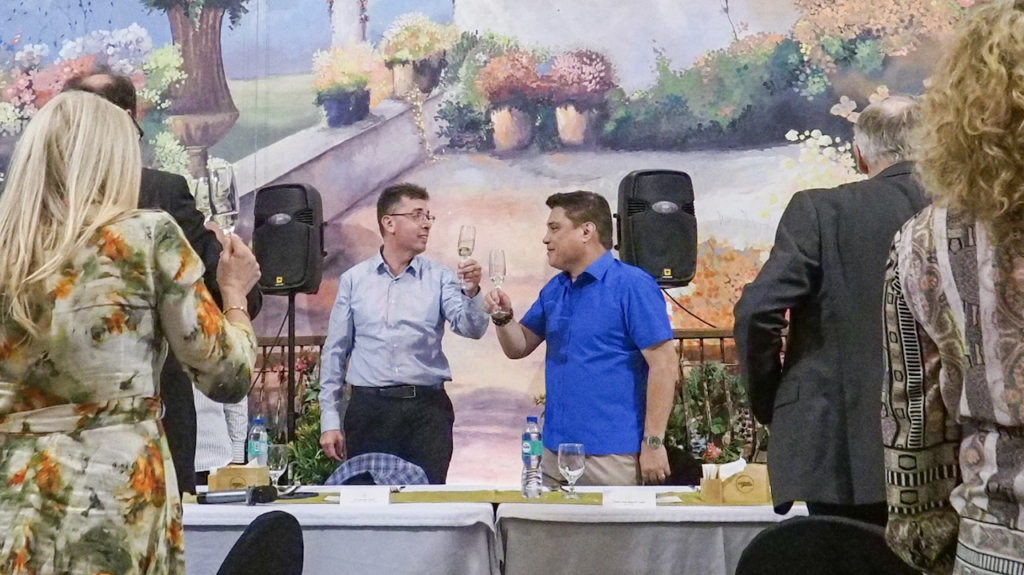
Ambassador Santoro acknowledged Senator Zubiri, and the commitment of local governments and civil society organizations to good governance and to green inclusive growth in the region.